Chapter V — Reflections

Short reflections from the residency.

Three short pieces written between recording sessions. They are not conclusions. They are the residue of a practice still in motion.

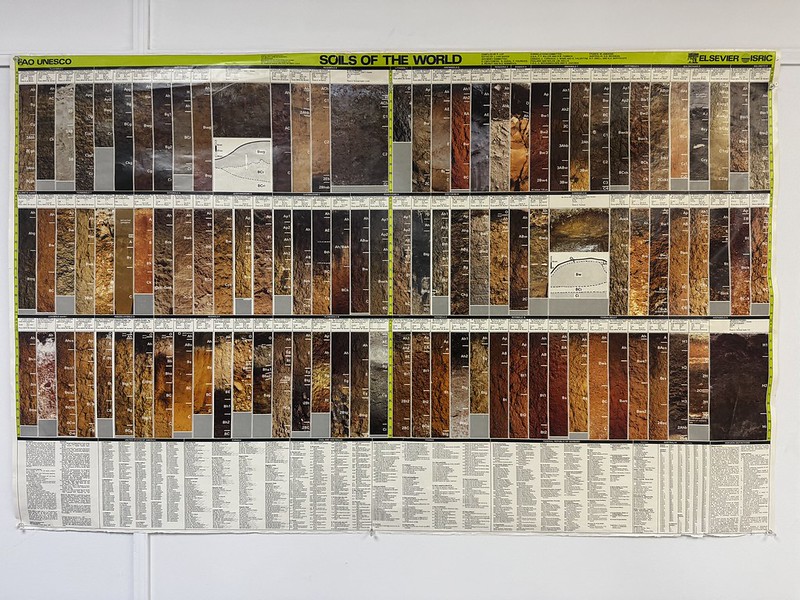
Soils of the World reference chart, FAO UNESCO / Elsevier ISRIC
SOILS OF THE WORLD, FAO UNESCO / ELSEVIER ISRIC. PHOTO OF A POSTER IN THE OTTAWA OFFICES OF CANSIS
01

Sonic Monoliths and the Discovery of Form

It took a season to stop asking the soil for answers and to begin receiving and responding to its questions.

I did not begin this project intending to make a sculpture.

The first questions were practical. How could microphones remain outdoors through changing weather? How could they be protected from rain and excessive moisture while remaining open to the sounds of the landscape? How might a listening station become part of the environment rather than interrupt it?

As I worked through these questions, the structures emerged, each solving a practical problem while quietly introducing another possibility. Standing together, they possessed a presence I had not anticipated. They were no longer simply housings for microphones. They had become sculptural forms. Those monoliths became a presence that I now interact with daily and feel the weight of in my life.

Their vertical forms gradually came to represent two perspectives: the scientific soil monolith used to study soil profiles, and the pipes of a pipe organ. This unexpected connection brought together the scientific and sonic dimensions of the project, giving the installation a sculptural identity that emerged through the research itself.

Traditional soil monoliths preserve the physical profile of the earth. These sonic monoliths preserve the less tangible: moments of listening. They stand not as records of what the soil is, but as invitations to encounter what the soil is continually becoming.

Looking back, I realize the sculpture was never imposed on the research. It emerged from it. The forms were shaped as much by weather, materials and the landscape as by my own decisions. In that sense, they became collaborators in the project, reminding me that making is also a way of listening.

The sonic monoliths continue to stand quietly in the landscape. Their purpose is not to explain the environment but to encourage a practice of listening. They invite visitors to spend time with the soil rather than simply observe it.
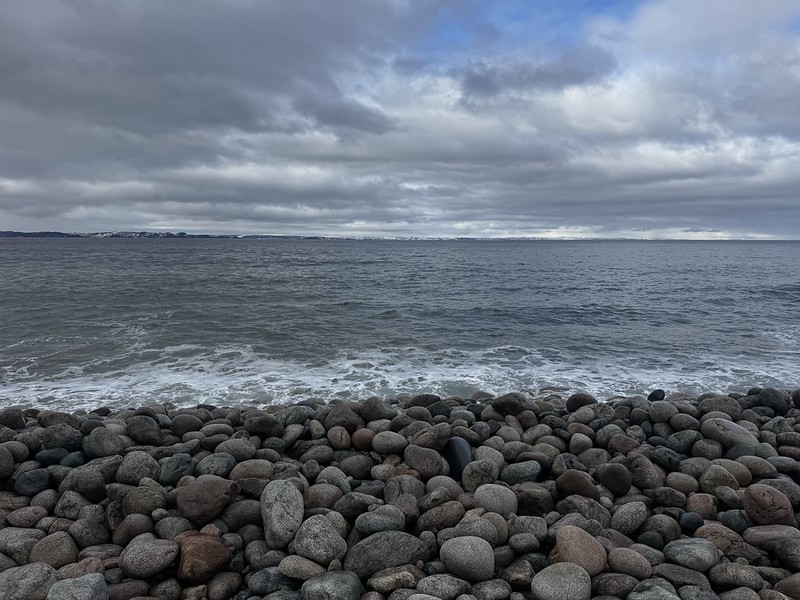
Rocky shoreline meeting cold water under a heavy sky
NEWFOUNDLAND SHORELINE, SOUTH CONCEPTION BAY
02

Newfoundland Soil

The rise and fall of ten thousand things.

My maternal grandmother passed away in her hometown of South Conception Bay, Newfoundland, a few days before Valentine's Day. By then, I had already spent months working intensely with soil, thinking about life beneath the surface and watching the slow cycles of growth and decay. Suddenly, I found myself surrounded by graves.

Standing in the cemetery, I felt a connection to the Newfoundland soil. I thought about the Tao and the image of the ten thousand things rising and falling, where all life emerges from the same source and eventually returns to it. Watching the ocean tides over the weekend, that idea no longer felt philosophical. It felt visible and grounding.

The cemetery became something more than a place of loss. The soil beneath the stones was not empty ground. It was alive, continuing the quiet work it has always done: receiving, transforming and giving back. Death was present, but so was renewal. The rise and fall of the tide, the weathered headstones and the earth beneath my feet all seemed to belong to the same ongoing movement.

I realized I had travelled to Newfoundland hoping to reconnect with my grandmother's family history. In many ways I did, but I also found something deeper. I found a new relationship with the land itself. The visit did not erase grief, but it softened it. It reminded me that we are never entirely separate from the places that shaped us or from the people who came before us.

We stayed in a house on the edge of the Atlantic. I remember the eerie sound of the ocean boom on repeat, reminding me of my place in this world. That boom came from the water crashing against the rocks. Once again, I found myself thinking about the Tao, where water is often understood as one of the most powerful forces in nature. Not because it overpowers rock, but because, with patience and persistence, it slowly shapes it.

When I returned to SoilScapes, I listened differently. The soil had become much more than the subject of my research. I began to understand it not only as a living ecosystem, but also as a place shaped by generations of life, death and renewal. That realization changed the questions I was asking and, ultimately, the way I listened.

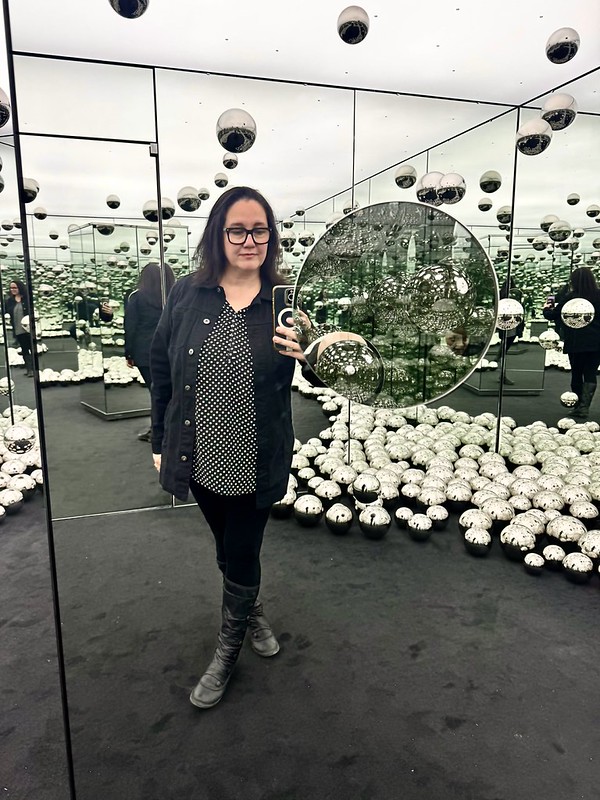
Self-portrait inside Yayoi Kusama's Infinity Mirrored Room, surrounded by reflective spheres and endless reflections
SELF PORTRAIT, YAYOI KUSAMA'S INFINITY MIRRORED ROOM, ART GALLERY OF ONTARIO
03

Self-Portrait in the Soil

We have been shaped by every encounter.

A self-portrait usually tells us what someone looks like. I have become more interested in what shapes the person behind the image.

I took this photograph while walking through Yayoi Kusama's Infinity Mirrored Room. The mirrors dissolved any fixed point of view. Every movement created another reflection, another possibility, another version of the same space. Looking at the photograph later, I realized it wasn't really a portrait of me. It was a portrait of perception.

SoilScapes unfolded in much the same way. I began with a straightforward question about listening to soil, believing that careful observation would lead to clear answers. Instead, the work became a series of unexpected encounters. A conversation redirected an idea. A piece of music suggested a sculpture. A cemetery changed the meaning of soil. A walk through the woods became part of the research. None of these moments belonged to a single plan, yet together they shaped the project.

Soil itself works through encounter. Minerals, fungi, roots, insects, water and microorganisms continually meet, separate and reorganize. New relationships emerge not because they were designed, but because living systems remain open to change.

Perhaps research is no different. We often imagine discovery as the pursuit of a single idea, but I have found it to be something more ecological. Understanding grows through cross-pollination. It develops through unexpected meetings between disciplines, places, memories and people. Looking back, the connections appear inevitable. Living through them, they felt almost accidental.

This self-portrait reminds me that I am not standing outside the research. Like the soil itself, I have been shaped by every encounter.