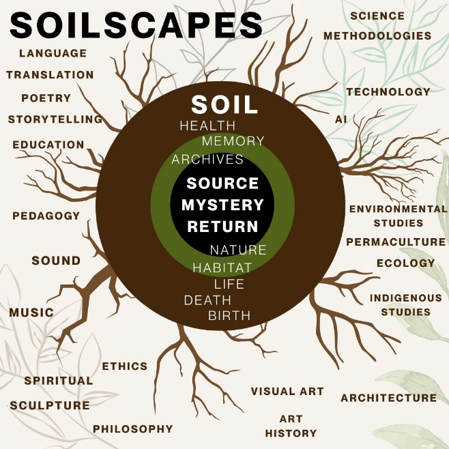
Chapter I — About
Listening, Encounter and the Assembly of the Living Portfolio
Synthesis paper
The synthesis paper will be placed here — a reader and a download link, once the document is deposited.
Act I
Summer — Building the ground
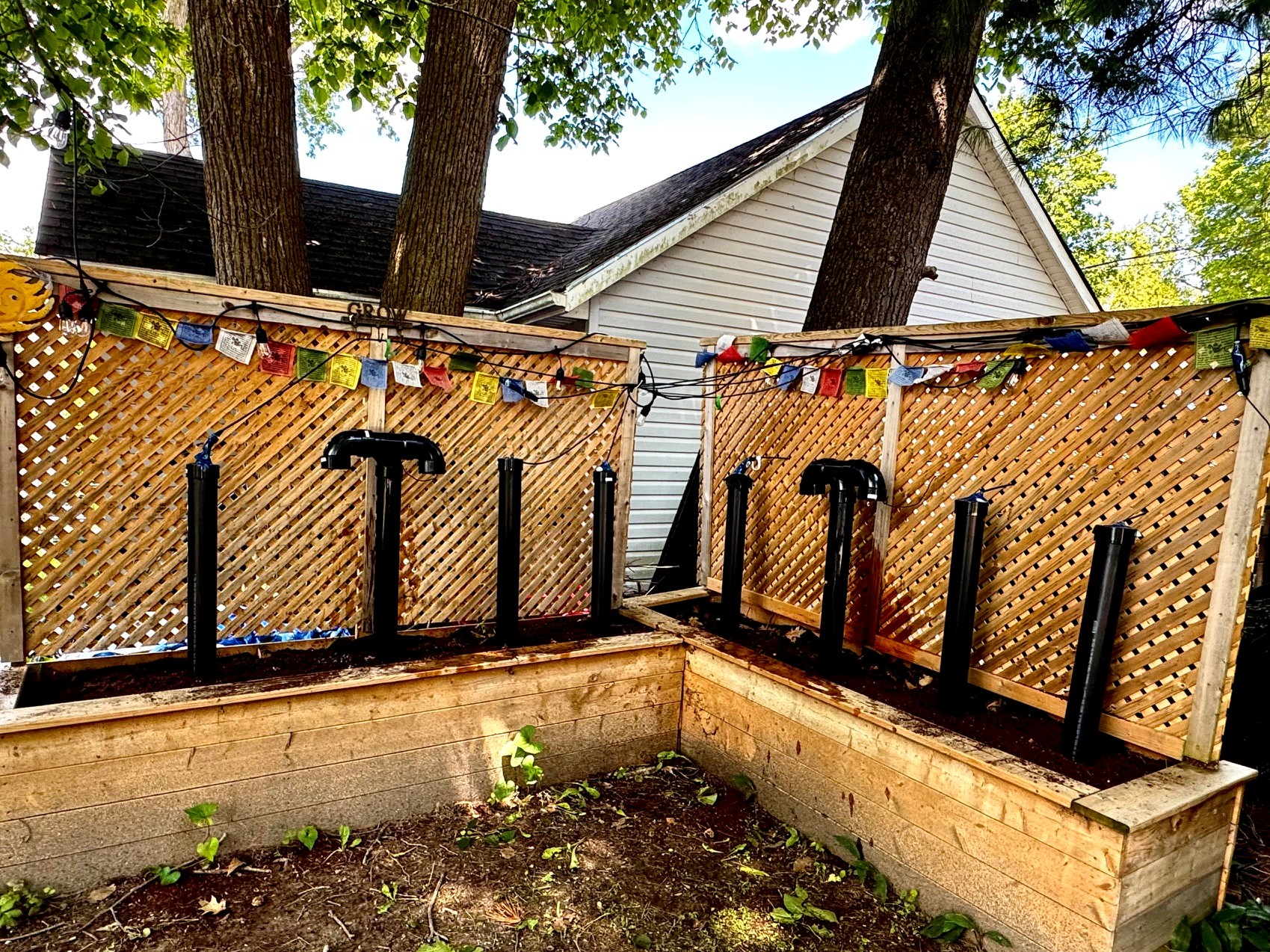
While the official SoilScapes project began in the summer of 2025, the concept of a soil listening station evolved from two pre-existing soil beds commissioned by Jennifer Claveau in the early summer of 2023.
The soil beds began as flower gardens and privacy screens in Jennifer's former Toronto backyard. Designed and built by her friend, drummer and carpenter—Michelle Josef. In December 2023, the beds were carefully deconstructed and transported to Oro-Medonte, Ontario, where they remained dormant as a pile of weathered lumber for nearly two years. During the extensive renovation of the adjacent building, now known as the Green Forest Gallery and Eco Arts Centre in Bass Lake, the beds were rebuilt and given their new purpose. Once domestic garden structures, they became the foundation for SoilScapes.
The soil was intentionally assembled rather than gathered from a single place. Composed of organic matter, minerals and locally sourced amendments, it formed a living medium designed to support both ecological processes and long-term observation. Over time, kitchen compost, plant roots and seasonal growth became part of its evolving composition, ensuring that the soil itself remained dynamic rather than fixed.
Act II
Winter — Interruption
The first hard freeze arrived before the research was ready. Snow and ice brought the original experiment to a halt, but the interruption revealed something unexpected. The project was never only about the soil. It was about learning to listen under changing conditions. Winter transformed the research from a controlled experiment into a responsive practice, where adaptation became part of the methodology and the landscape itself emerged as a collaborator.
Act III
Spring — The emergence of listening
By the spring thaw, the research no longer asked how to measure the soil. It asked how to listen. The soil beds became partners in a long, slow conversation and the archive that follows is not a record of conclusions but of attention. It is necessarily partial, shaped by time, still unfinished and always becoming.
Act IV
Summer — Fruit and flowers
A disruption in the original methodology created an unexpected opening. Rather than asking what the soil could communicate about itself, I began asking what sustained listening might reveal about human perception. The experiment evolved into a residency. The soil emerged as a collaborator, while the microphones became instruments of an ongoing conversation. The work shifted from data collection toward a practice of attention, care and reciprocal observation.
Act V
The conversation continues
SoilScapes has no final season. Like the living systems it observes, the work continues to evolve. Each return to the soil reveals new relationships, new rhythms and new questions. The archive remains open, inviting future acts of listening, collaboration and care.